Branches of Schedule Commercial Banks (SCBs) in India

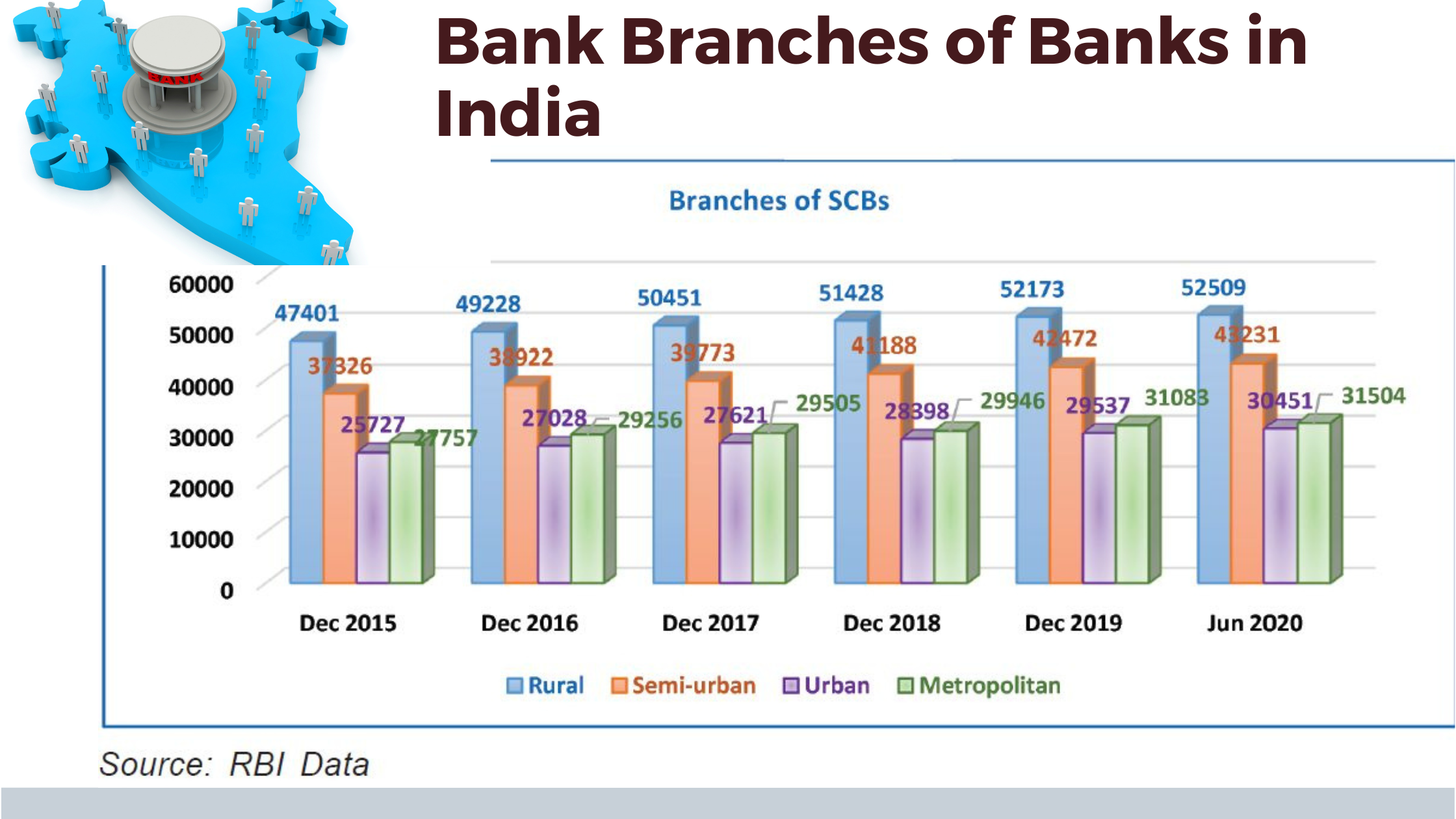
How are the Branches of Schedule Commercial Banks (SCBs) in India segregated between Metro to Rural areas?

The last 10 years have witnessed a CAGR of 6% in the number of branches of SCBs across the country. The increase in branches, especially in rural and semi-urban areas has been an enabler for instilling banking practices in these areas which aids digital payments.

#banking #payments #banks #financialservices #fintechstartup #fintech #rbipolicy #atmanirbharbharatabhiyan #compliancerisk #riskmanagement #fintech2020 #regtech

What is e-Money in India?

What is e-Money in India?,

Has Demonetization given it a much-needed push toward a cashless economy?

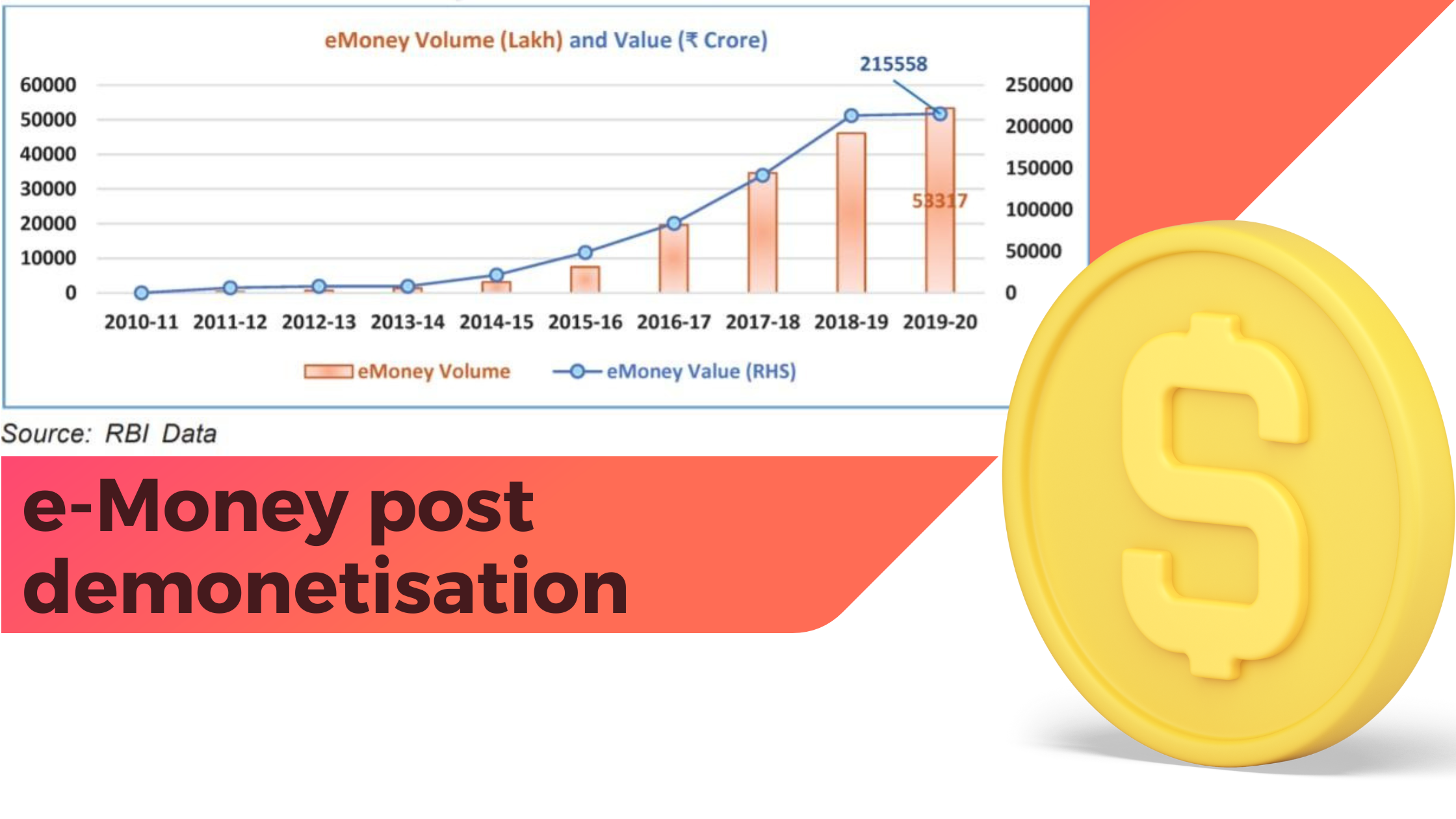
e-Money is prepaid value stored electronically, which represents the liability of the e-money issuer (a bank, an e-money institution, or any other entity authorized or allowed to issue e-money in the local jurisdiction) and which is denominated in a currency backed by an authority. In India, eMoney is PPIs issued as Wallets and Cards.

Post-demonetization in November 2016, appears to be a game-changer for e-Money, as people switched to electronic modes of payments resulting in a year-on-year growth of 162.5% in the year 2016.

While medium to large-value transactions continue to be made through digital banking channels and cheques, the low-value day-to-day transactions shifted to e-Money.

The trend continued in succeeding years, viz., an increase of 76%, 33%, and 15% in volume in FYs 2017-18 and 2018-19 and 2019-20 respectively, showing a perceptible shift towards e-Money.

#payments #fintech #india #rbipolicy #banking #banks #compliancerisk #complianceregulations #compliancerisk #fintechstartup #atmanirbharbharatabhiyan #financialservices

Frauds in Banks – Trends

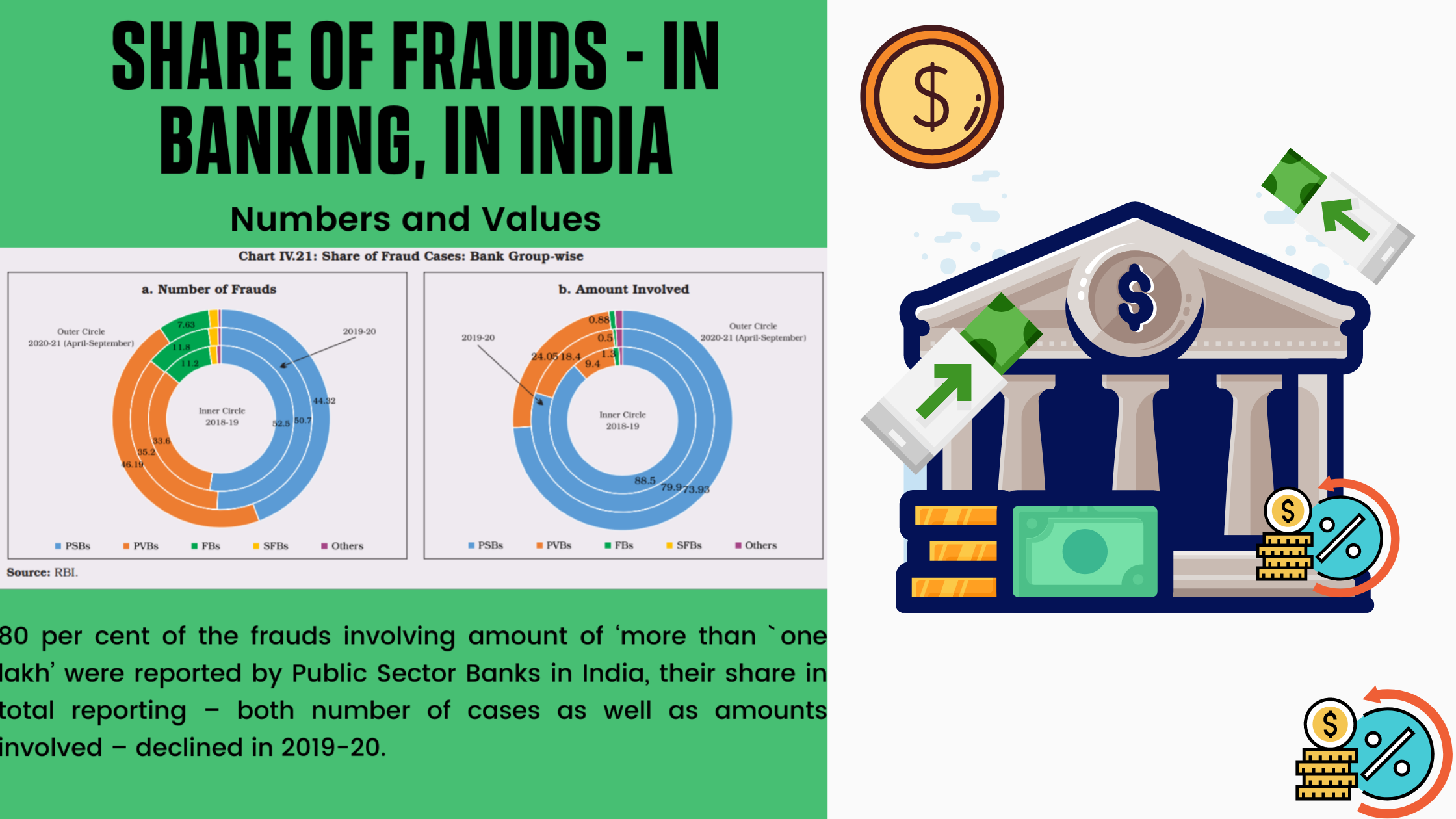
Is the share of value and number of frauds in Banks in India as reported by Public Sector Banks to RBI showing declining trends?

If so,

This is a good sign.

What do you have to say? Comments are welcome.

NBFCs in India – Number vs. Value

NBFCs in India – Number vs. Value

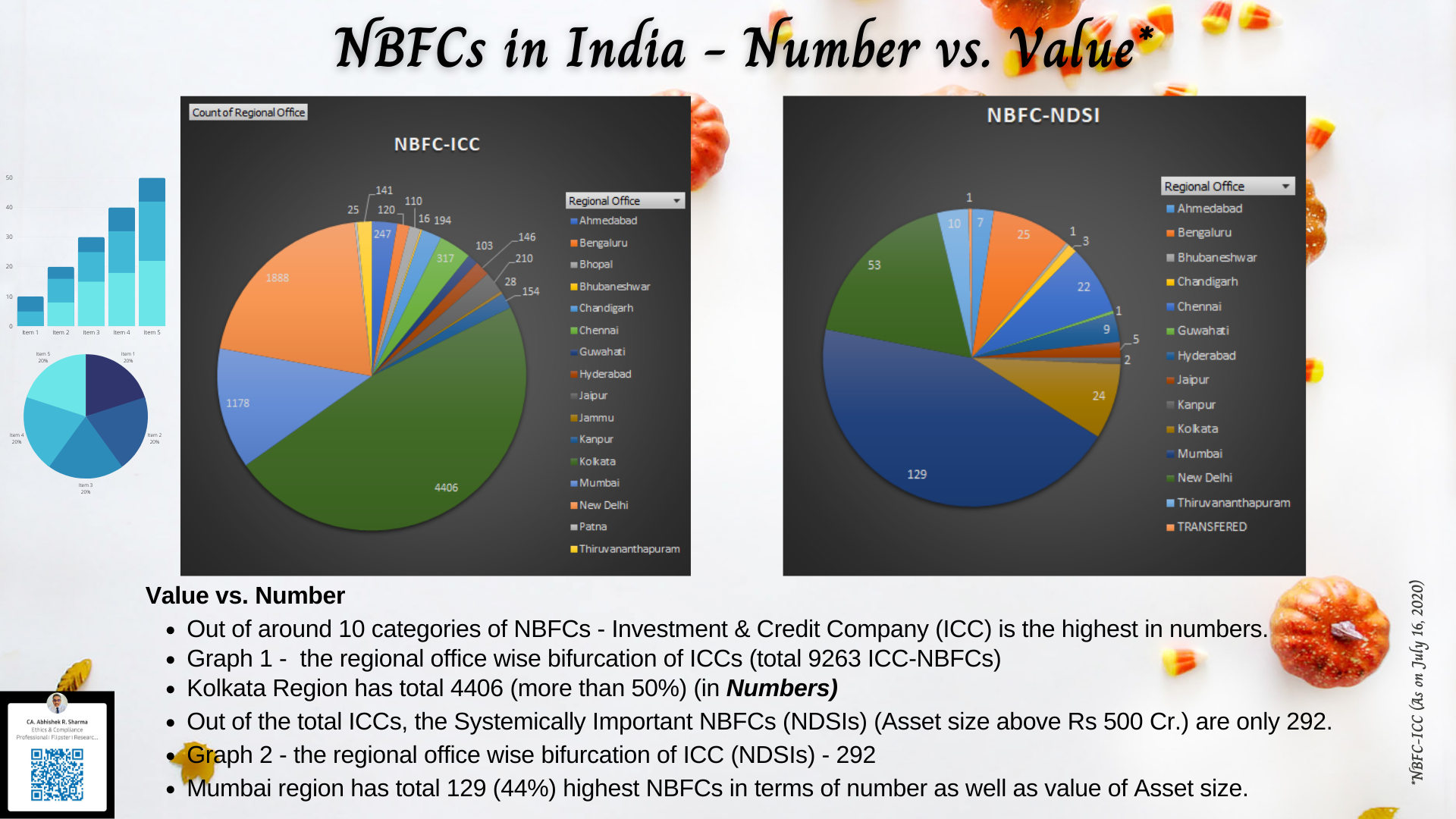
With RBI’s looking for scale based regulatory regime for NBFCs in India, the brief analysis shows, out of 9000+ Investment & Credit NBFCs (ICCs), only 292 are Systemically Important (with Asset Size above Rs. 5000 Mn.).

While Kolkata is amongst the top in terms of no. of ICCs (50% of the total ICCs), Mumbai beats in terms of no. of SIs around 129 out of 292.

#paretoprinciple seems to be prominently apparent in the given scenario.

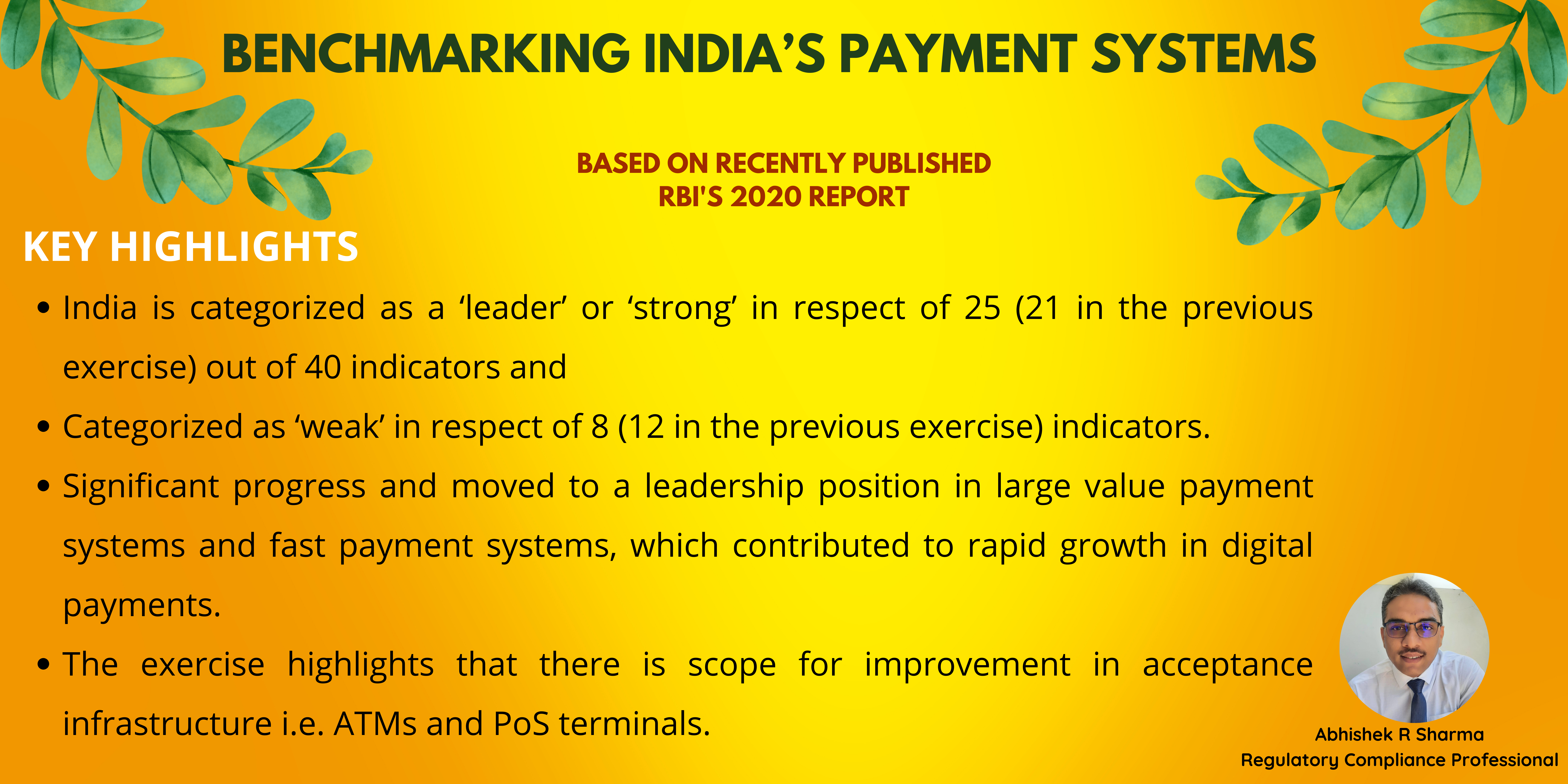
Benchmarking India’s Payment Systems

  • India is categorized as a ‘leader’ or ‘strong’ in respect of 25 (21 in the previous exercise) out of 40 indicators and
  • Categorized as ‘weak’ in respect of 8 (12 in the previous exercise) indicators.
  • Significant progress and moved to a leadership position in large value payment systems and fast payment systems, which contributed to rapid growth in digital payments.
  • The exercise highlights that there is scope for improvement in acceptance infrastructure i.e. ATMs and PoS terminals.

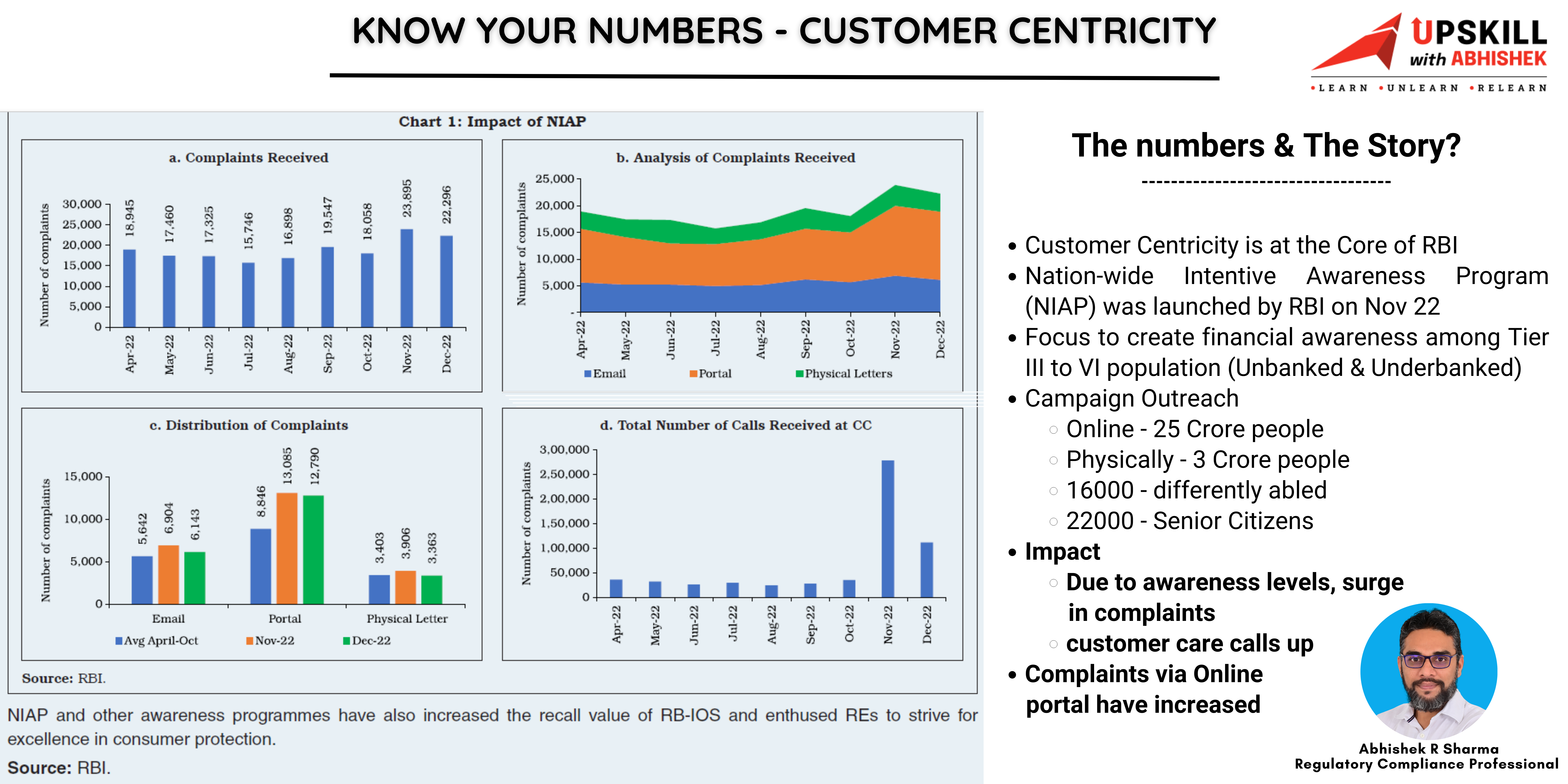
Customer Centricity is at the Core of RBI

The Numbers & The Story?

———————————-

  • Customer Centricity is at the Core of RBI
  • Nation-wide Intentive Awareness Program (NIAP) was launched by RBI on Nov 22
  • Focus to create financial awareness among the Tier III to VI population (Unbanked & Underbanked)
  • Campaign Outreach
    • Online – 25 Crore people
    • Physically – 3 Crore people
    • 16000 – differently abled
    • 22000 – Senior Citizens
  • Impact
    • Due to awareness levels, the surge in complaints
    • Customer care calls up
  • Complaints via the Online portal have increased

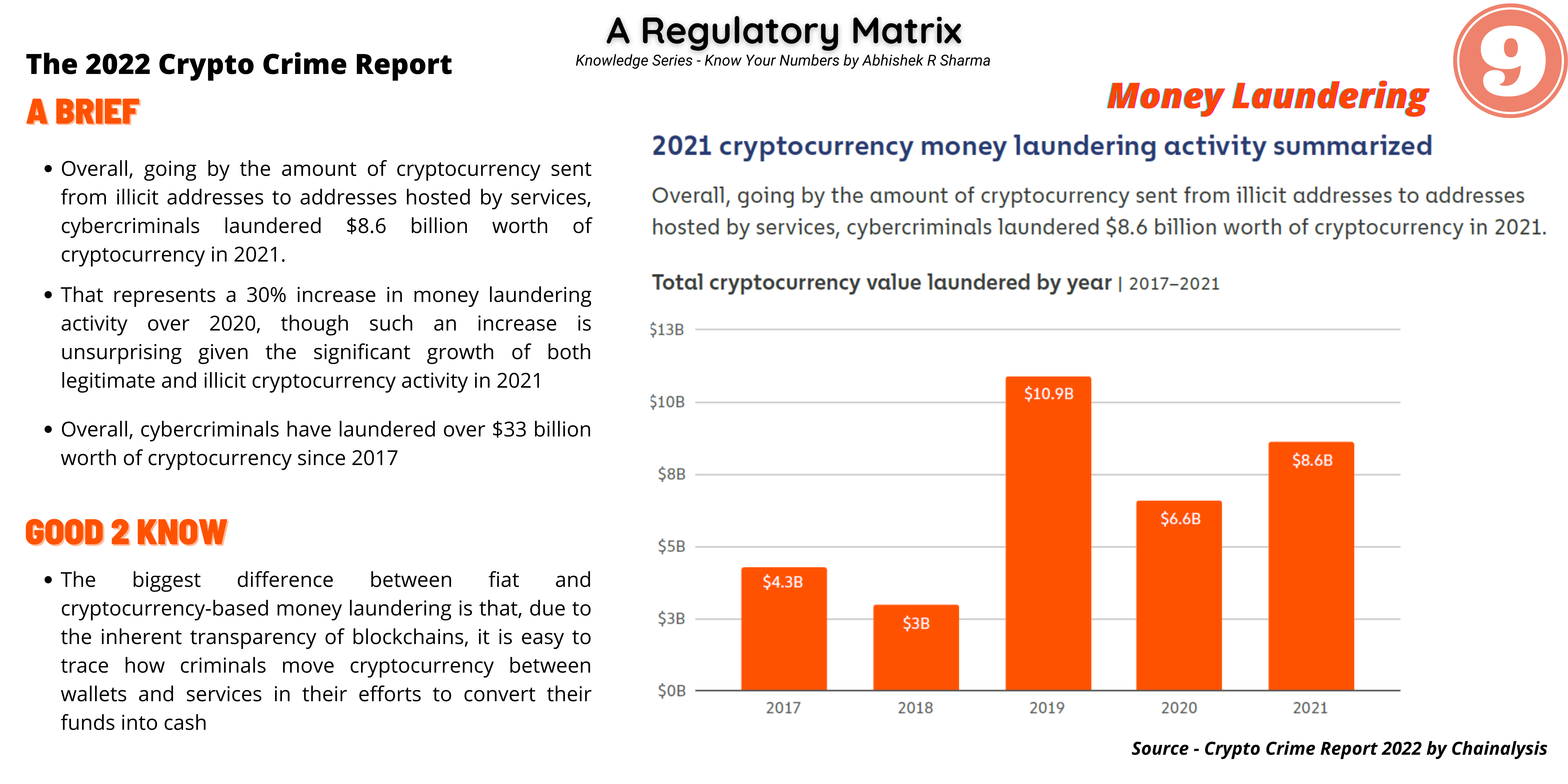
The 2022 Crypto Crime Report

Overall, going by the amount of cryptocurrency sent from illicit addresses to addresses hosted by services, cybercriminals laundered $8.6 billion worth of cryptocurrency in 2021.

That represents a 30% increase in money laundering activity over 2020, though such an increase is unsurprising given the significant growth of both legitimate and illicit cryptocurrency activity in 2021

Overall, cybercriminals have laundered over $33 billion worth of cryptocurrency since 2017.

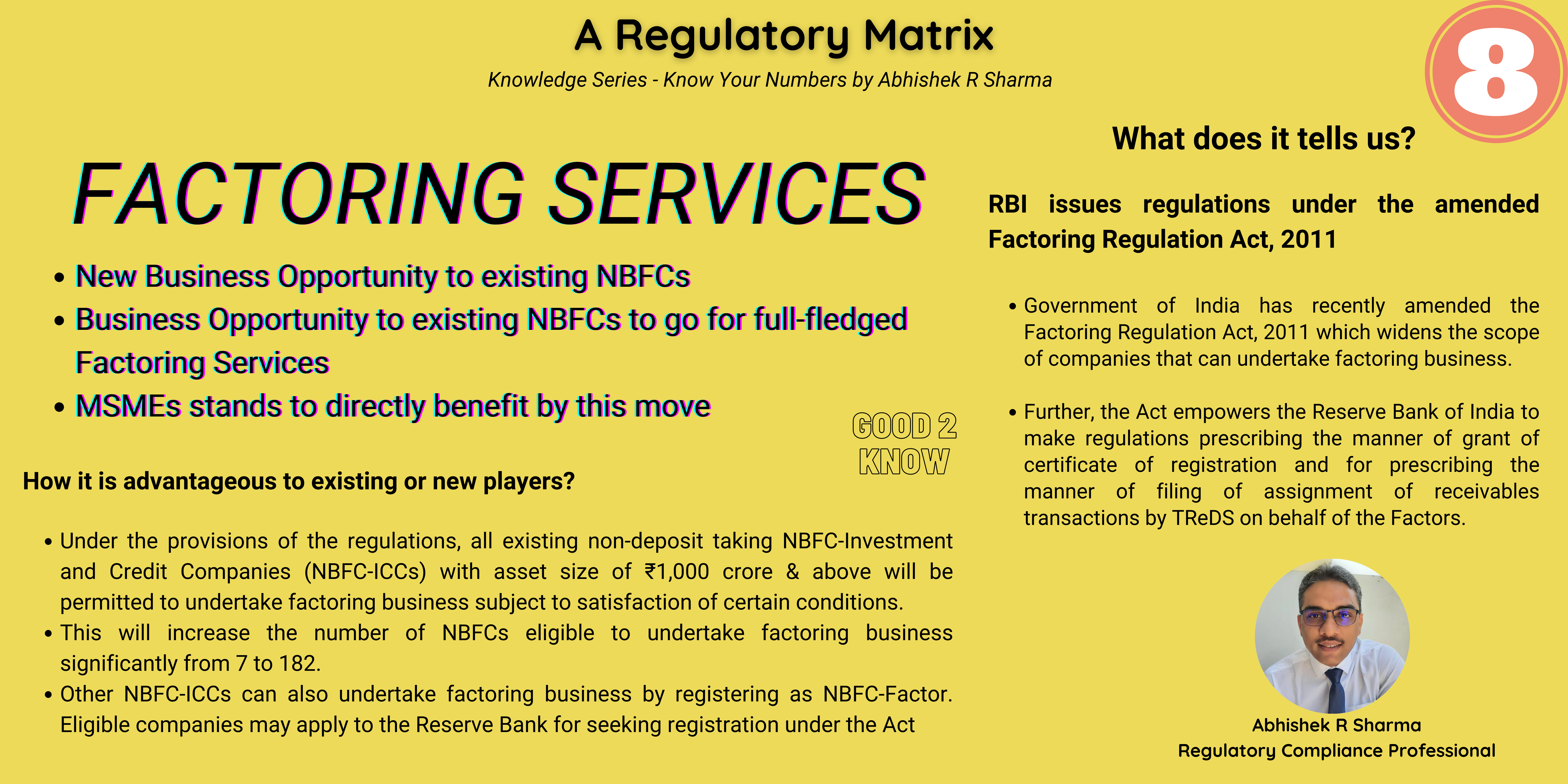
Factoring Services

What does it tell us?

RBI issues regulations under the amended Factoring Regulation Act, 2011

  • The government of India has recently amended the Factoring Regulation Act, 2011 which widens the scope of companies that can undertake factoring business.
  • Further, the Act empowers the Reserve Bank of India to make regulations prescribing the manner of granting a certificate of registration and for prescribing the manner of filing of assignment of receivables transactions by TReDS on behalf of the Factors.

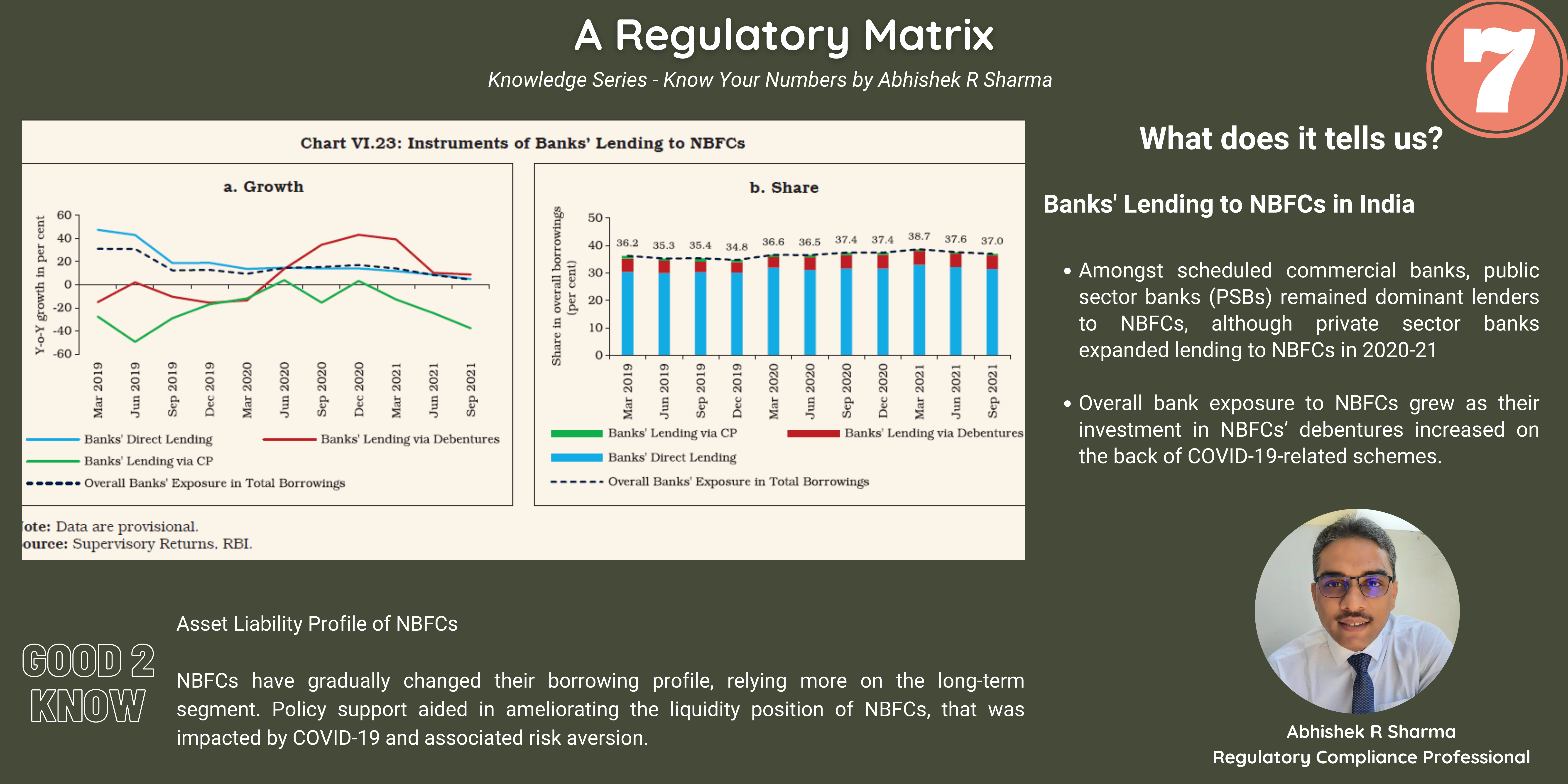
Banks’ Lending to NBFCs in India

What does it tell us?

Banks’ Lending to NBFCs in India

  • Amongst scheduled commercial banks, public sector banks (PSBs) remained dominant lenders to NBFCs, although private sector banks expanded lending to NBFCs in 2020-21
  • Overall bank exposure to NBFCs grew as their investment in NBFCs’ debentures increased on the back of COVID-19-related schemes.

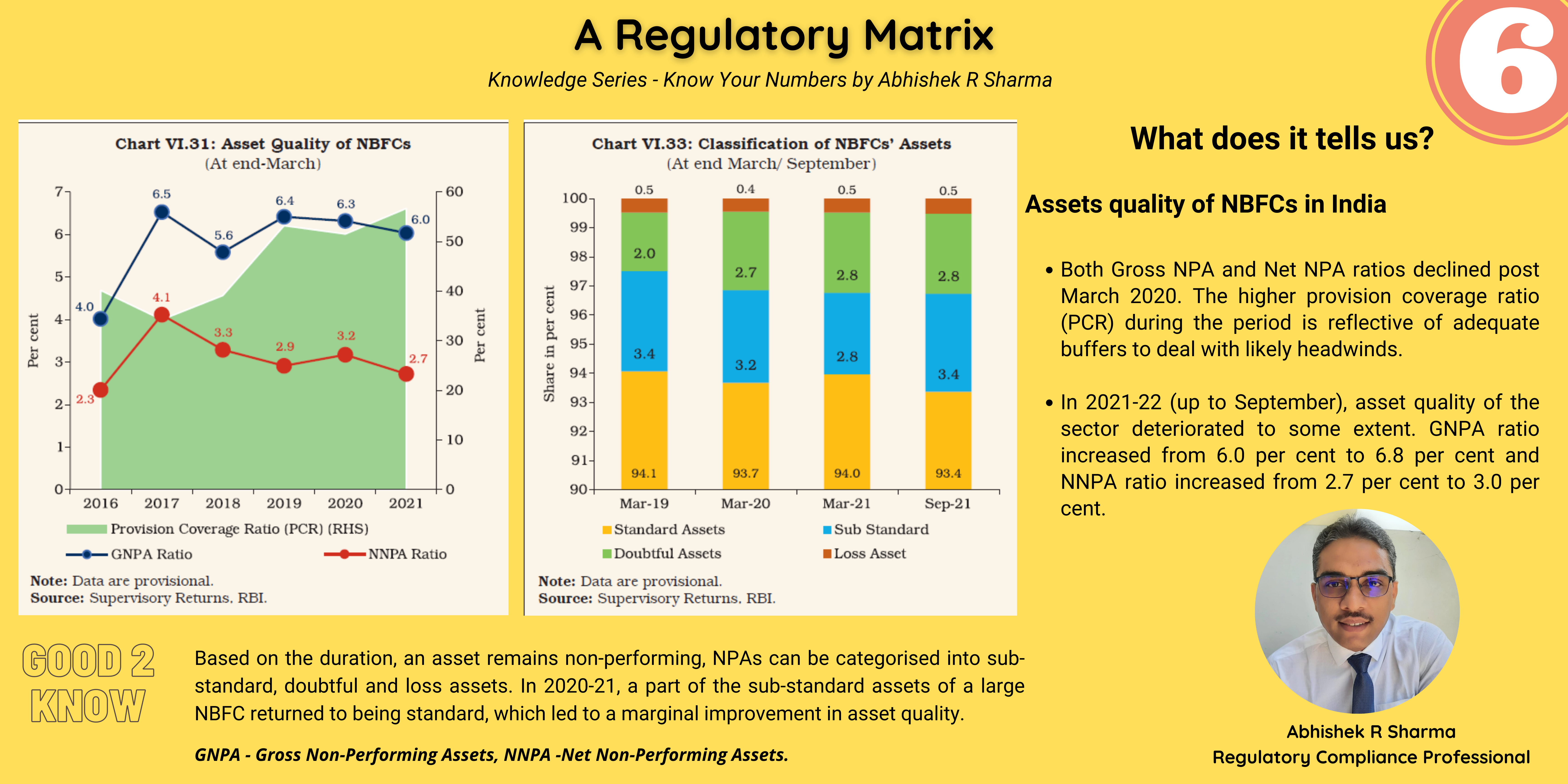
Assets quality of NBFCs in India

What does it tell us?

Assets quality of NBFCs in India

  • Both Gross NPA and Net NPA ratios declined post-March 2020. The higher provision coverage ratio (PCR) during the period is reflective of adequate buffers to deal with likely headwinds.
  • In 2021-22 (up to September), the asset quality of the sector deteriorated to some extent. GNPA ratio increased from 6.0 percent to 6.8 percent and the NNPA ratio increased from 2.7 percent to 3.0 percent.